Alcohol Abuse Cameroon Family: The Devastating Silent Addiction Families Hide (2026)
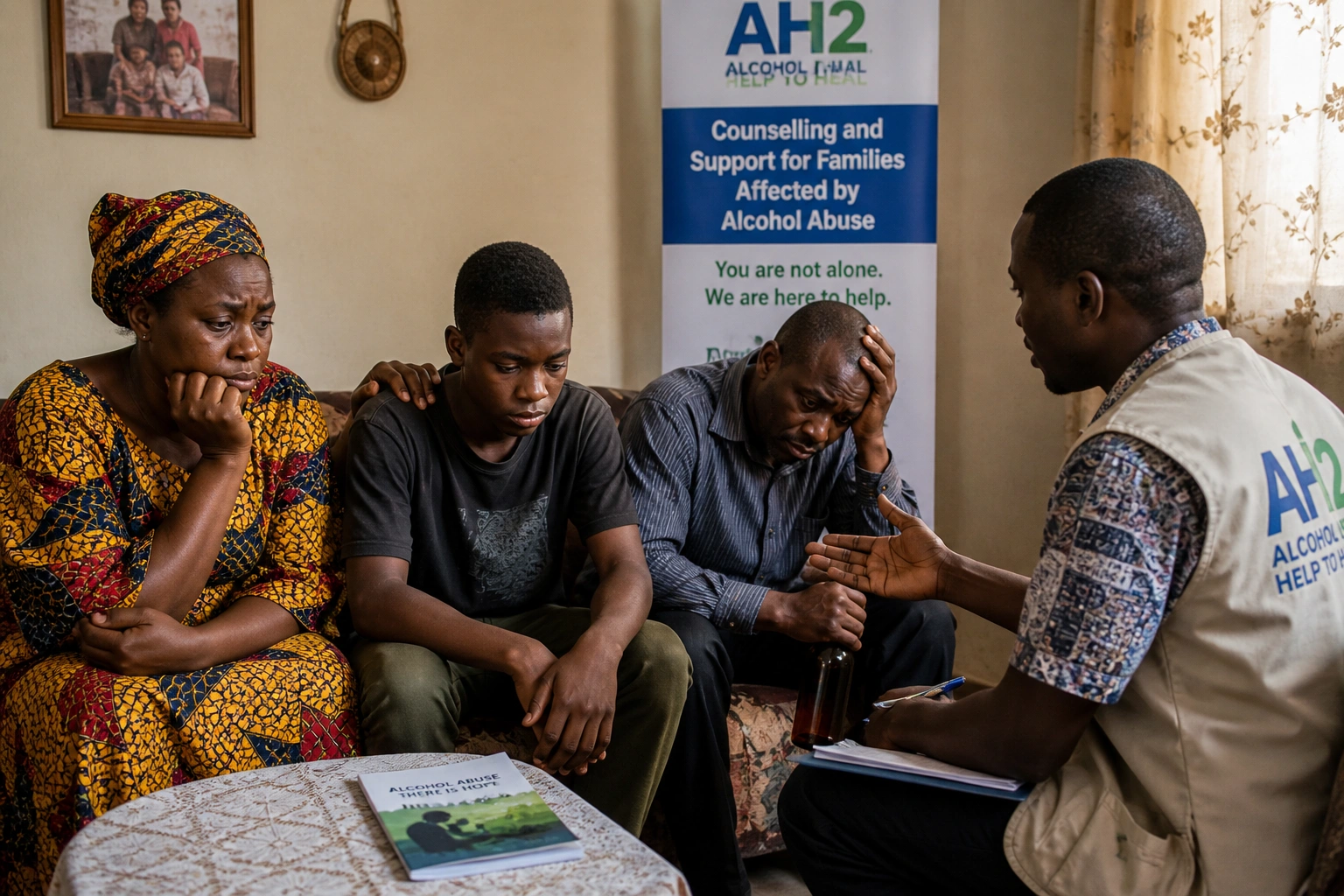
Nobody calls it addiction. They call it socialising. They call it culture. They call it a man being a man. But behind closed doors, alcohol abuse Cameroon family life silently falls apart — dinner tables go quiet, children learn to read their father’s mood before he opens his mouth, and wives carry a weight they were never taught the language to describe.
Alcohol is not an underground substance in Cameroon. It is the most visible, most accessible, most socially accepted drug in the country. And that is precisely what makes it so dangerous.
This article is for you — the spouse who lies awake wondering if it will be a good night or a bad one. The mother watching her adult son drink the way his father did. The family member who knows something is deeply wrong but has never heard anyone call it what it is: addiction.
How Alcohol Abuse Cameroon Family Life in Ways Nobody Talks About
The numbers tell a story that most Cameroonian families already know but refuse to say out loud. According to World Bank data compiled from WHO estimates, Cameroon’s total alcohol consumption stands at approximately 10.1 litres of pure alcohol per person per year — one of the highest rates in Central Africa. A peer-reviewed study published in the Pan African Medical Journal (PMC, 2022) found that among tertiary students in Buea, alcohol use prevalence reached a staggering 98.4%, making it by far the most consumed substance in the country.
But these numbers only measure who drinks. They do not measure who suffers.
The real toll of alcohol abuse Cameroon family members carry is invisible in research tables: the income spent on drinks instead of school fees, the arguments that escalate after dark, the children who grow up believing that chaos is normal. A 2024 study published in PMC examining high school students in Yaoundé found that 42.4% had already consumed at least one psychoactive substance — with alcohol accounting for the overwhelming majority. The cycle starts early. And without intervention, it repeats across generations.
The Link Between Alcohol Abuse Cameroon Family Violence and Silence
Here is the statistic that should stop every reader: a cross-sectional survey published in BMC Women’s Health (2022), using data from Cameroon’s 2018 Demographic and Health Survey, found that the prevalence of domestic violence among ever-married Cameroonian women was 30.5%. Among the strongest predictive factors? A husband who drinks alcohol — associated with a threefold increase in the likelihood of domestic violence.
This is not coincidence. Alcohol reduces impulse control, distorts judgment, and amplifies aggression. In a cultural context where heavy drinking among men is normalised — where refusing a drink at a gathering can itself provoke ridicule — the path from social drinking to habitual abuse to domestic violence is shorter than most families want to admit.
And yet, families remain silent. The reasons are deeply human: shame, economic dependence, fear of social judgment, religious pressure to endure, and the widespread belief that what happens inside a marriage stays inside a marriage. Women endure. Children adapt. And the person who is drinking continues because no one around them has the tools or the support to say: this has to stop.
The damage does not remain between two adults. Children raised in homes shaped by alcohol abuse Cameroon family patterns show carry that trauma forward — into their own relationships, their own coping habits, and in too many cases, their own drinking. Breaking that cycle requires someone in the family to be the first to speak.
Recognising the Warning Signs Before It Is Too Late
Alcohol abuse does not announce itself. It arrives gradually — disguised as routine, wrapped in excuses, protected by silence. Here are the signs that what your family is living with has crossed the line from drinking to dependence.
Financial erosion. Money disappears. Bills go unpaid. School fees are delayed. Savings shrink. The household budget starts revolving around alcohol — but no one names it as the cause.
Emotional unpredictability. The drinker’s mood becomes the household thermostat. Good days are relief. Bad days are survival. Children and spouses learn to read body language the way they should be learning to read books.
Social withdrawal or aggression. The person either retreats from family life entirely or becomes confrontational — especially when questioned about their drinking. Both patterns isolate the family further.
Physical decline. Fatigue, weight changes, bloodshot eyes, trembling hands, stomach complaints. According to the WHO, alcohol is a causal factor in more than 200 disease and injury conditions globally — including liver cirrhosis, cardiovascular disease, and several forms of cancer.
Denial. This is the most consistent sign. The person insists they can stop at any time. They minimise the quantity. They compare themselves to someone who drinks more. Denial is not dishonesty — it is a symptom of the addiction itself.
If you are reading this list and recognising your household, you are not overreacting. You are seeing clearly — perhaps for the first time.
What Families Can Do — and How AH2 Provides Confidential Support
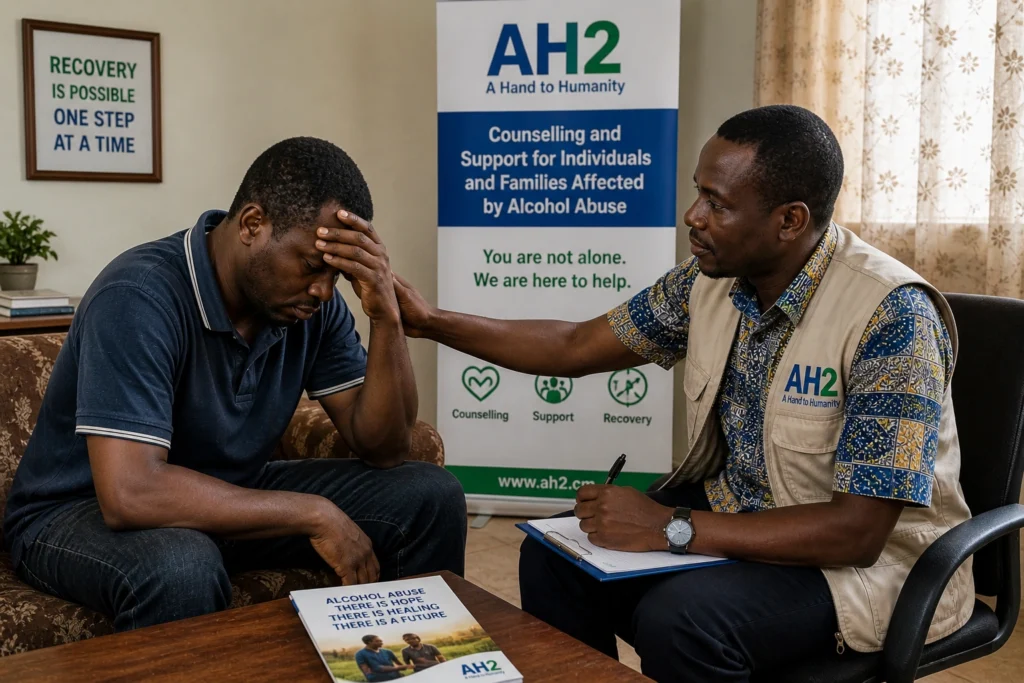
The hardest step is not confronting the person who drinks. The hardest step is admitting — to yourself — that your family needs help. Everything after that becomes possible.
A Hand to Humanity (AH2) was founded in 2020 by Rev. Peter Nillong in Yaoundé, Cameroon, with a dual mission: orphanage outreach and drug prevention and addiction recovery. Since then, AH2 has supported 1,640+ lives across 6 community programmes — including confidential psychological counselling for individuals and families affected by substance abuse. AH2 partners with the Ministry of Health Cameroon, CADCA, and ISSUP to ensure its approach meets recognised professional standards.
If your family is dealing with alcohol abuse Cameroon family counselling through AH2 is available, private, and judgment-free. AH2’s addiction recovery programme includes one-on-one psychological counselling, community reintegration support, and family guidance — because addiction is never just the drinker’s problem. It belongs to the entire household. Healing must, too.
Here is what you can do right now. First, stop protecting the secret. Silence does not keep the family safe — it keeps the addiction alive. Second, reach out for professional support. AH2’s 23+ active volunteers and trained counsellors understand the cultural pressures Cameroonian families face and work within that reality, not against it. Third, know that recovery is possible. It is not fast. It is not painless. But it is real, and families across Cameroon are already walking that road with AH2 beside them.
You are not alone in this. And you are not betraying your family by seeking help — you are saving it.
The stigma around alcohol abuse Cameroon family members carry in silence is not something you have to accept. Name it. Face it. And let someone walk with you through it.
👉 Contact AH2 for confidential family counselling and addiction support. 👉 Donate to keep AH2’s addiction recovery programmes running. 👉 Learn more about AH2’s causes and community programmes.